
Travel laundry detergent tips matter most when you’re trying to pack light, re-wear basics, and still look put together without hunting for an expensive hotel service or a sketchy laundromat at midnight. The good news, you usually don’t need a perfect setup, you just need a method that fits your trip.
If you’ve ever opened a suitcase to a detergent spill, or realized your “quick sink wash” left shirts stiff and funky, you already know the pain points. Travel laundry is less about “washing everything,” more about controlling odor, drying speed, and fabric care with the limited time and space you actually have.
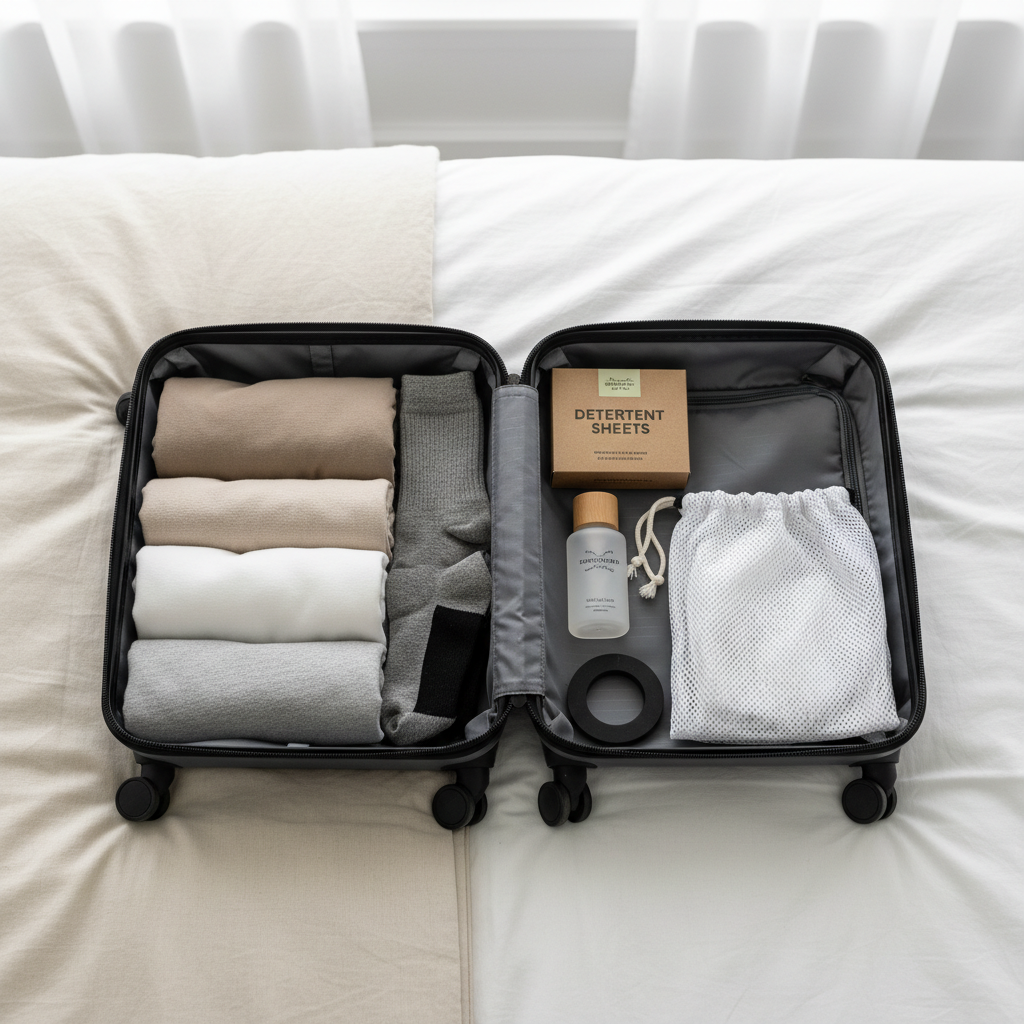
This guide focuses on what tends to work for most US travelers: how to choose a travel-friendly detergent, how to wash in a sink without leaving residue, and when it’s smarter to use a machine. I’ll also call out common mistakes that quietly ruin clothes or waste time.
Pick the right detergent format for your trip (it’s not one-size-fits-all)
The “best” option depends on your luggage, your laundry frequency, and whether you’ll have access to machines. For many people, the format matters more than the brand, because leaks and TSA rules cause more problems than cleaning power.
Quick comparison table
| Detergent format | Why travelers like it | Trade-offs to expect | Best use |
|---|---|---|---|
| Detergent sheets | No leaks, light, TSA-friendly | May dissolve slower in cold water, can under-dose bulky items | Sink wash, quick refresh loads |
| Concentrated liquid (decanted) | Easy dosing, good on mixed fabrics | Leak risk, TSA limits for carry-on liquids | Machine wash, longer trips |
| Laundry pods | Pre-measured, convenient | Can stick in low-water cycles, not great for sink wash | Standard machines, predictable loads |
| Soap bar (laundry or castile) | Versatile, compact | Can leave residue in hard water, not ideal for technical fabrics | Spot cleaning, emergencies |
According to the Transportation Security Administration (TSA), carry-on liquids must follow the 3-1-1 rule, so sheets, powders, and bars often reduce hassle versus decanted liquids. That one detail changes packing choices fast.
A fast self-check: what laundry approach fits you?
Before you buy anything, decide what problem you’re solving. A lot of travel laundry frustration comes from using a “laundry day” plan when you actually need an “odor control” plan.
- If you’re gone 2–4 days: bring a small amount for spot cleaning, prioritize airing out and rotating outfits.
- If you’re gone 5–10 days: plan one real wash, plus one or two sink refreshes for underwear and tees.
- If you’re doing outdoor or sweaty travel: pick something that rinses clean, residue traps smell in synthetic fabrics.
- If you’ll be carry-on only: avoid anything that can leak or get flagged as a messy spill risk.
- If you hate doing laundry on vacation: choose quick-dry clothing and build a “small wash often” habit, it’s less annoying than a big batch.
If you’re unsure, default to a small, flexible kit. Most people don’t need to wash jeans in a sink, but they do need socks and base layers to feel clean.
How to wash clothes in a sink without wasting time (or leaving residue)
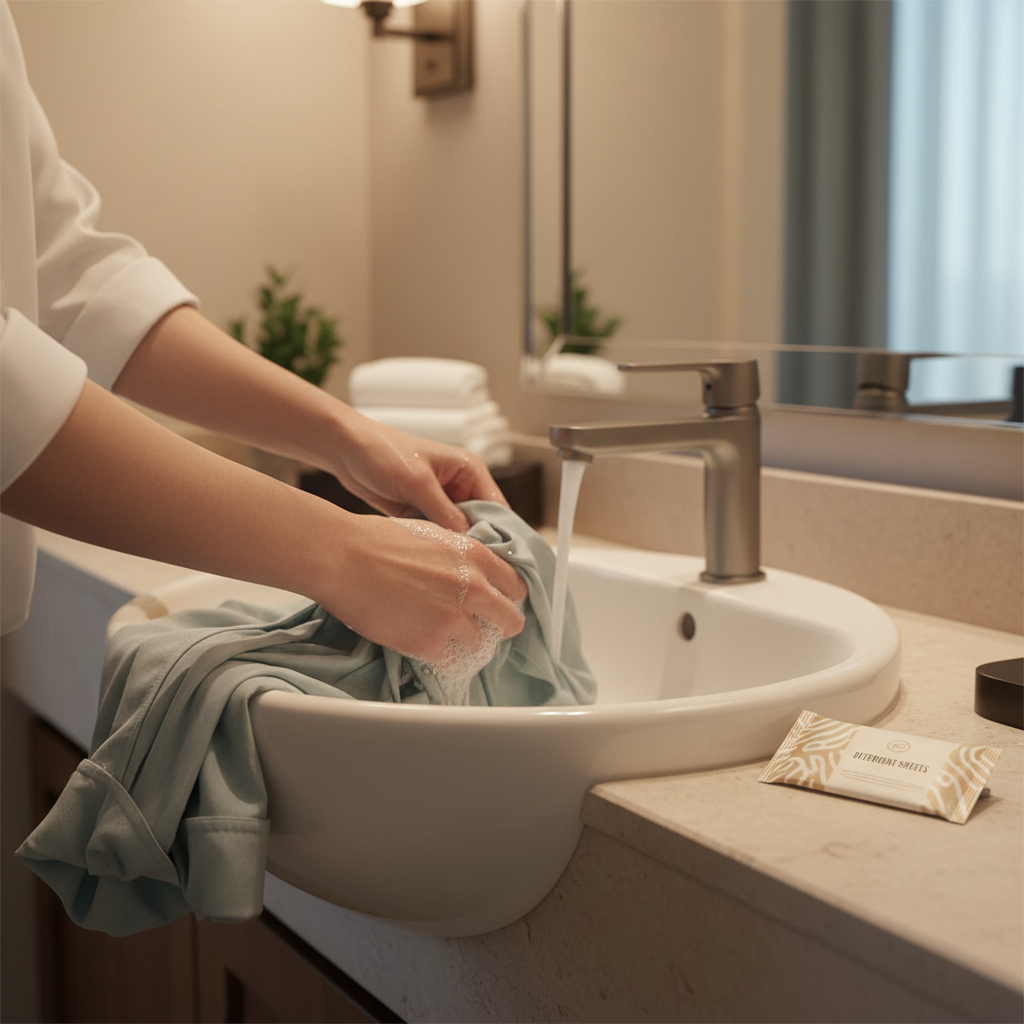
Travel laundry detergent tips for sink washing come down to three things: pre-treat, don’t overuse detergent, and rinse better than you think you need to.
Step-by-step sink wash (10–20 minutes active time)
- Start with the cleanest sink you can: a quick rinse, then wipe if needed. If that feels questionable, use a dry bag or a portable wash bag.
- Use cool to lukewarm water: hot water can set some stains and can be rough on technical fabrics.
- Dose small: about a teaspoon of concentrated liquid, or a partial sheet, often works for a couple light items.
- Soak briefly: 5–10 minutes for sweat and body oils, longer soaking often adds little and slows you down.
- Agitate gently: rub fabric against itself at collars, underarms, socks heels. Skip aggressive twisting, it stretches knits.
- Rinse twice: refill clean water and swish until water runs clear. Residue is a big reason “clean” clothes still smell.
Drying trick that saves your trip
Roll items in a towel and press firmly to remove water, then hang. This reduces drying time dramatically, especially in humid rooms where “air drying overnight” turns into “still damp tomorrow.”
Using machines and laundromats: get cleaner clothes with fewer surprises
If you have access to a washer, use it, but keep a few travel realities in mind. In many places you won’t know the machine settings, and you may get high heat by default.
- Choose cold or warm when possible: safer for colors and many synthetics.
- Go easy on detergent: high-efficiency machines need less, and extra soap can trap odor if it doesn’t rinse fully.
- Pack a small stain tool: even a mini spray bottle or stain wipe helps with food and sunscreen marks before they set.
- Use a mesh bag: protects socks, underwear, and reduces “missing item” chaos.
According to the Centers for Disease Control and Prevention (CDC), proper hand hygiene helps reduce spread of germs, so if you’re using shared laundry spaces, washing hands after handling dirty clothing is a sensible habit. If you have specific health concerns, it’s reasonable to consult a medical professional.
Odor control while traveling: washing is only half the job
Many people chase “more detergent” when the real fix is managing moisture and bacteria between wears. That’s especially true for workout shirts, underwear, and socks.
- Air out immediately: don’t ball clothing into a corner of your bag. Even 30 minutes on a chair helps.
- Separate damp items: a ventilated laundry bag or a simple plastic bag used temporarily prevents your whole suitcase from picking up funk.
- Rotate footwear: shoes are often the hidden odor source, not the clothes.
- Target the hotspots: armpits, waistbands, sock heels. Quick rinses here can extend wear time.
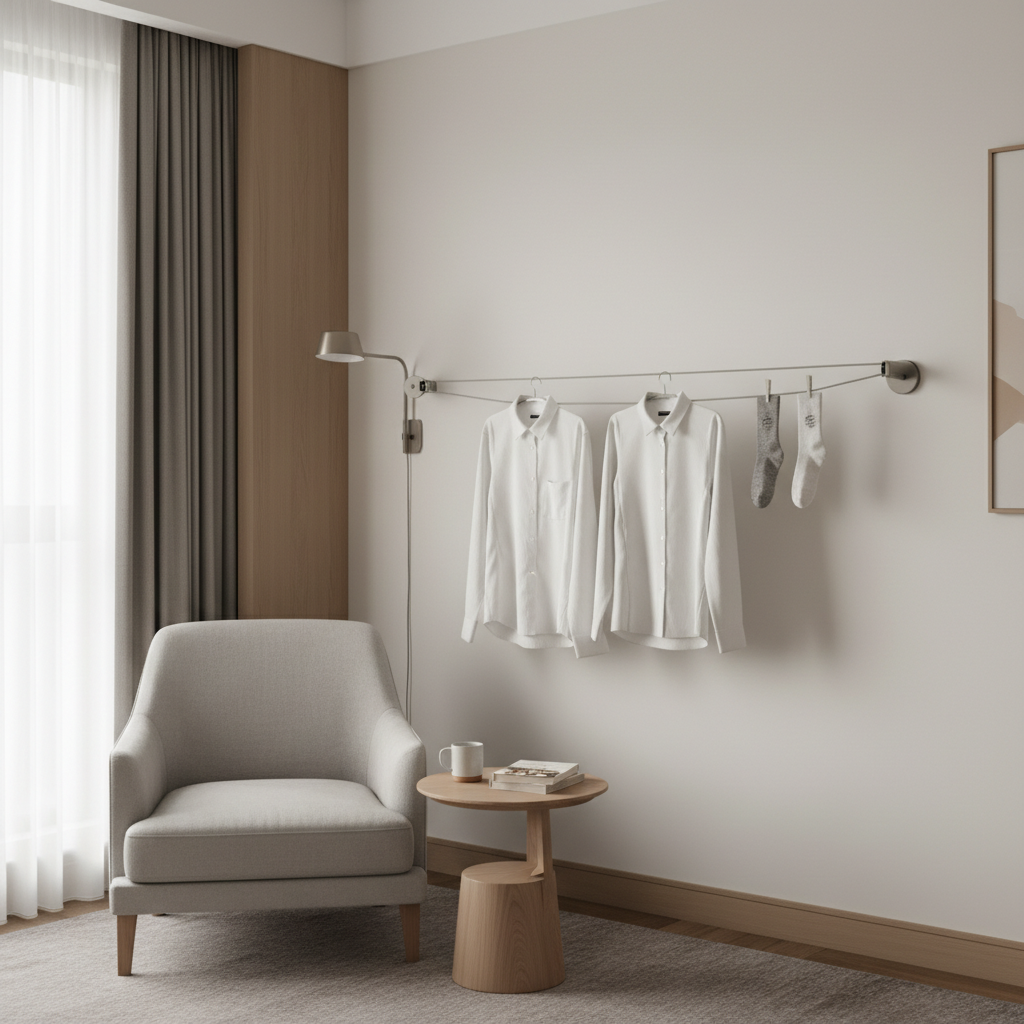
If you want one simple rule, don’t pack anything away until it’s fully dry. That’s the moment mildew smell starts, and it’s hard to reverse mid-trip.
Common mistakes that make travel laundry harder than it needs to be
- Overpacking detergent: you rarely need enough for “daily full washes,” you need enough for a few small loads.
- Using body wash as detergent: it can work in a pinch, but it may leave residue and can irritate skin for some people.
- Skipping rinses: leftover soap attracts dirt, and some fabrics keep odor when detergent film remains.
- Washing heavy cotton in a hurry: it dries slowly, which turns into stale smell. Save thick hoodies and jeans for machines.
- Hanging in bad airflow: bathrooms can be humid. A room with airflow or near AC often dries faster.
Practical packing list: a small kit that covers most trips
Here’s a realistic kit that balances convenience with space. Adjust based on whether you’re doing sink washes, machines, or both.
- Detergent sheets or a leakproof 1–3 oz bottle (carry-on friendly if you follow TSA guidance)
- Sink stopper if you’ve been burned by hotel sinks that don’t seal
- Mesh laundry bag for small items
- Mini stain remover (pen or wipe)
- Travel clothesline or a few clothespins if you expect limited hang space
Conclusion: keep it simple, then get consistent
Travel laundry detergent tips aren’t about turning your hotel into a laundromat, they’re about preventing small problems from becoming a suitcase-wide mess. Pick a detergent format that won’t leak, learn a quick sink routine, and treat drying as part of washing, not an afterthought.
If you want an easy next step, build a tiny laundry kit once, then leave it packed between trips. The second time you use it, you’ll feel the difference.
FAQ
What’s the best travel laundry detergent for carry-on bags?
Detergent sheets or a small amount of powder often travel easiest because you avoid liquid limits and leaks. If you prefer liquid, use a truly leakproof bottle and keep it inside a zip bag.
How much detergent do I really need for a one-week trip?
For many travelers, enough for one small machine load plus a few sink washes covers it. You can usually under-dose and still get clean clothing if you rinse well and don’t overload items.
Can I wash clothes in a hotel sink safely?
Usually yes, but cleanliness varies. If the sink looks questionable, using a portable wash bag or even a clean dry bag can help keep things more hygienic.
Why do my “clean” travel clothes still smell?
The common culprit is detergent residue or slow drying, especially with synthetic fabrics. Use less detergent, rinse twice, and focus on faster drying with the towel-roll method.
Are laundry pods okay for travel?
They’re convenient for machines, but they’re less flexible for tiny sink loads and can be messy if one breaks in your bag. If you use pods, pack them in a hard case.
What should I do if detergent irritates my skin while traveling?
Stop using that product and rewash items with plain water if possible. Fragrance-free options may help, and if irritation persists or worsens, it’s smart to consult a medical professional.
How do I prevent mildew smell in my suitcase?
Never pack damp clothing, even if it feels “almost dry.” Air out items, use a breathable bag for worn clothes, and give shoes attention, they can spread odor quickly.
If you’re trying to travel lighter without sacrificing comfort, a small, reliable laundry routine makes a bigger difference than buying more clothes, and if you’d rather keep it even simpler, you can standardize on one detergent format and a repeatable sink-wash checklist so you don’t rethink it every trip.