
how to use hair dryer in foreign country usually comes down to one thing people underestimate: power standards, not the dryer itself.
If you have ever packed your favorite dryer and then found it either did nothing, tripped a breaker, or started smelling hot, you already met the real problem, voltage and plug differences, plus bathroom outlet quirks in hotels.
This guide walks you through quick checks, practical travel setups, and a few “don’t do this” mistakes that cause most failures, so you can dry your hair safely and avoid frying a tool you actually like.
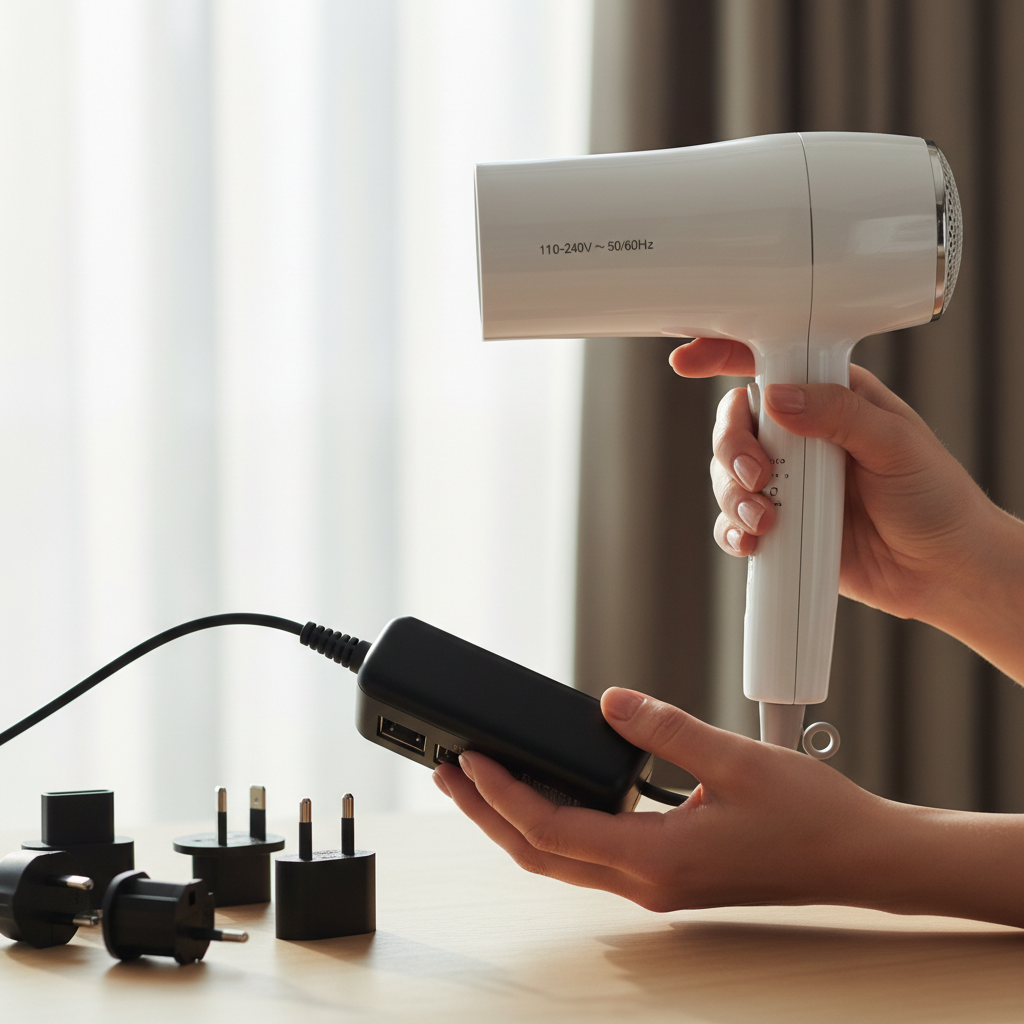
Why hair dryers act weird abroad
Most U.S. hair dryers are designed around 120V / 60Hz. Many countries run 220–240V (often at 50Hz). If you plug a 120V-only dryer into 230V, it can overheat fast or fail immediately, and in some cases it can create a safety risk.
Frequency (50Hz vs 60Hz) matters less for simple heating coils, but it can affect some motors, fans, and electronic controls. That is why two dryers with the same wattage can behave differently in the same hotel.
- Voltage mismatch: the biggest reason for “dead” or “too hot” dryers.
- High wattage load: many dryers pull 1200–1875W, which stresses cheap converters.
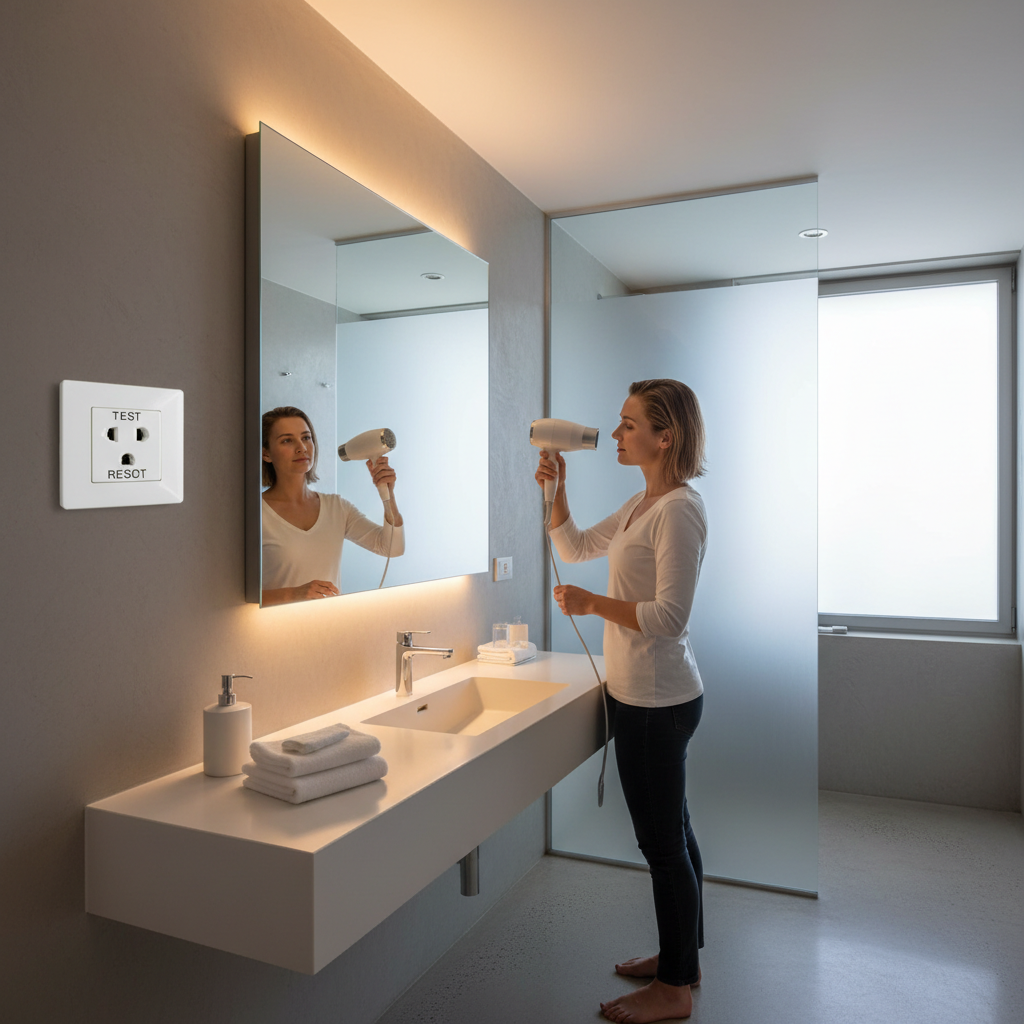
- Hotel bathroom wiring: outlets may be on low-power shaver circuits or protected by GFCI/RCD.
- Plug shape: adapters solve shape, not electricity.
Start here: read the label on your hair dryer
Before you buy anything, flip the dryer and find the tiny print near the handle or cord. You are looking for “Input” or “Rated.” This one label decides how to use hair dryer in foreign country safely.
What the label usually means
- “120V 60Hz” only: you need a voltage converter that can handle your dryer’s wattage, and many travel converters cannot.
- “100–240V 50/60Hz”: this is dual voltage, you typically only need a plug adapter.
- Switchable dual voltage (often a small slider 110/220): you must set the switch correctly before plugging in.
If the label is unreadable or missing, treat the dryer as 120V-only, it is the safer assumption.
Adapter vs converter: the simple rule most travelers miss
A plug adapter changes the pin shape so your plug fits the wall. It does not change voltage. A voltage converter changes the electricity your device receives, and that is where things get tricky with hair dryers.
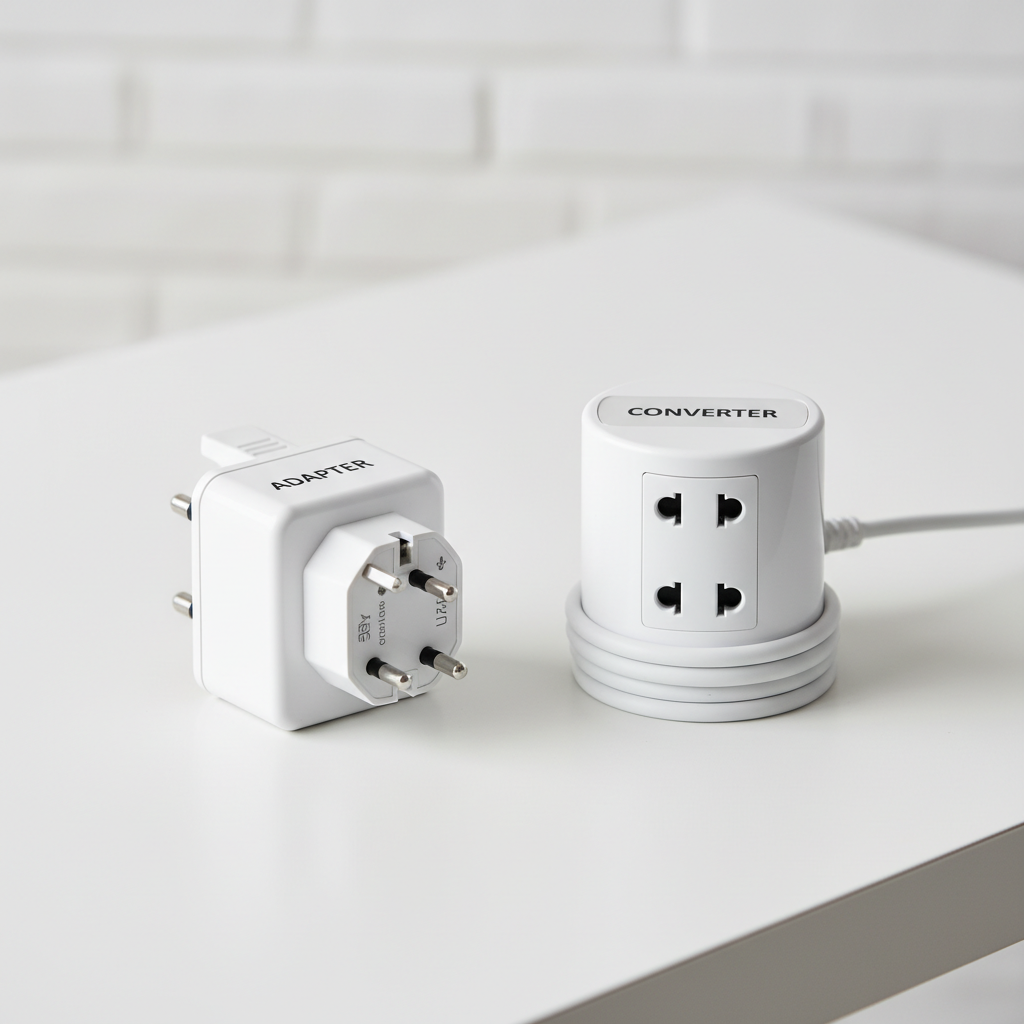
A practical decision table
| What you have | What the country uses | What you need | Reality check |
|---|---|---|---|
| Dual-voltage dryer (100–240V) | Any voltage | Plug adapter | Most reliable travel setup |
| Switchable 110/220 dryer | 220–240V | Set switch + plug adapter | Easy to forget the switch, double-check |
| 120V-only U.S. dryer | 220–240V | High-wattage converter + adapter | Many converters overheat with dryers |
| Any dryer | Unknown hotel outlet | Ask front desk or use in-room outlet | Bathroom outlets may be limited |
According to the U.S. Consumer Product Safety Commission (CPSC), using electrical appliances around water requires extra caution, and many bathrooms use protective outlets to reduce shock risk. That protection can also trip when a high-watt dryer draws power.
Quick self-check: which travel scenario are you in?
If you just want the fast answer on how to use hair dryer in foreign country, sort yourself into one of these buckets and follow the matching setup.
- You travel often and want minimal fuss: buy a dual-voltage travel dryer.
- You travel once and the hotel has a dryer: use the hotel dryer, bring a small adapter for other devices.
- You must use your own dryer (hair type, routine, attachments): verify it is dual-voltage, or plan for a serious converter, not a tiny “travel cube.”
- You are going to the UK/EU/Australia: assume 230V unless you confirm otherwise.
- You are going to Japan: many areas use ~100V, your U.S. dryer might run but can be weaker, outlet limits still apply.
Step-by-step: using a hair dryer abroad without drama
This is the workflow that prevents most problems. It looks basic, but the order matters.
1) Confirm voltage, then choose your hardware
- If your dryer says 100–240V, pack a quality plug adapter for your destination.
- If it is 120V-only, consider leaving it at home and using a travel dryer or hotel dryer instead.
- If you still plan to use it, pick a converter rated above your dryer’s wattage and designed for high-watt heat tools.
That last point is where many people get burned, literally or financially. Hair dryers are high-draw devices, and “converter” listings can be vague. If the converter does not clearly support your wattage, assume it will struggle.
2) Plug in the right way
- Plug the adapter/converter into the wall first.
- Then plug the dryer into the adapter/converter.
- Turn the dryer on at a lower heat setting for the first 10–15 seconds, listen for odd surging or smell.
3) Watch for warning signs and stop early
- Breaker trips, outlet clicks off, or power cuts: stop and switch outlets, many bathroom circuits are limited.
- Buzzing, pulsing airflow, or the dryer feels unusually hot: unplug and reassess voltage compatibility.
- Hot adapter/converter: warmth can be normal, but “too hot to touch” is a no.
Common mistakes (and what to do instead)
A lot of “my dryer exploded abroad” stories are the same three mistakes repeating.
- Mistake: Buying a cheap adapter and assuming it converts power.
Do instead: treat adapters as pin-shape only, verify voltage support on the dryer label. - Mistake: Using a small travel converter meant for 50–200W devices.
Do instead: if you need conversion for a dryer, look for a high-watt unit and keep sessions short, or choose a dual-voltage dryer. - Mistake: Plugging into the bathroom “shaver only” outlet.
Do instead: use a standard room outlet if allowed, or use the hotel dryer that matches the room wiring. - Mistake: Forgetting the 110/220 switch.
Do instead: check the switch before every use, especially after packing.
According to IEC (International Electrotechnical Commission) guidance on electrical safety, selecting equipment that matches the supply characteristics and using properly rated accessories reduces overheating and shock risk. In plain terms, match voltage, match wattage, avoid sketchy adapters.
Travel-friendly solutions, ranked by convenience
If you are planning ahead, you have options that make how to use hair dryer in foreign country feel boring, which is the goal.
Option A: Dual-voltage travel hair dryer
- Best for: frequent travelers, carry-on packing, peace of mind.
- Tradeoff: often less powerful than a full-size U.S. dryer.
Option B: Use the hotel hair dryer
- Best for: short trips, you do not care about attachments.
- Tradeoff: quality varies a lot, sometimes low airflow.
Option C: Bring your U.S. dryer + high-watt converter
- Best for: you truly need your specific dryer and it is 120V-only.
- Tradeoff: heavier, more heat risk, more points of failure.
Safety notes worth taking seriously
Hair dryers mix electricity, heat, and bathrooms. Even if you have done it a hundred times at home, travel setups add unknowns.
- Keep distance from water, and avoid using a dryer near a running sink or wet countertop.
- Do not use damaged cords or loose adapters, arcing can happen.
- Give converters breaks; long continuous drying sessions can overheat smaller units.
- If you feel unsure about an outlet, ask the hotel staff or use their provided dryer.
This article is general information, if you have a medical device, scalp condition, or a unique electrical setup, it may be smart to consult a qualified electrician or the device manufacturer for guidance.
Practical packing checklist (printable mindset)
Here is what I would check the night before a flight, because it prevents 90% of the hassle.
- Dryer label photo saved on your phone (voltage and wattage visible)
- Correct plug adapter for the destination (Type C/G/I, etc.)
- Converter only if your dryer is not dual-voltage, and rated for the dryer wattage
- Heat protectant and a simple backup style plan if the dryer is weaker than home
Conclusion: the simplest way to make it work
how to use hair dryer in foreign country is easy once you stop guessing: confirm whether your dryer is dual-voltage, use an adapter only when the dryer supports the local voltage, and avoid relying on tiny converters for high-watt heat tools.
If you want the least stressful setup, use a dual-voltage dryer or the hotel dryer, then treat your adapter kit as something you buy once and keep for every trip.
Next step: check your dryer’s label today, then match your destination plug type and voltage before you pack, it is a two-minute task that can save your dryer.