
Best travel eye mask for light sleepers really comes down to two things: how completely it blocks light, and whether it stays comfortable when you move, sweat a little, or sleep on your side. If you wake up the moment a cabin light flicks on, or hotel curtains leak sunrise, the “wrong” mask feels like a minor annoyance that turns into a long, cranky day.
It’s worth getting specific because not all “blackout” masks behave the same. Some let light sneak in around the nose bridge, some press on your eyelids and make your eyes feel tired, and some slide off the second you shift positions. The good news is you can usually predict which style works for you in a couple minutes, if you know what to look for.
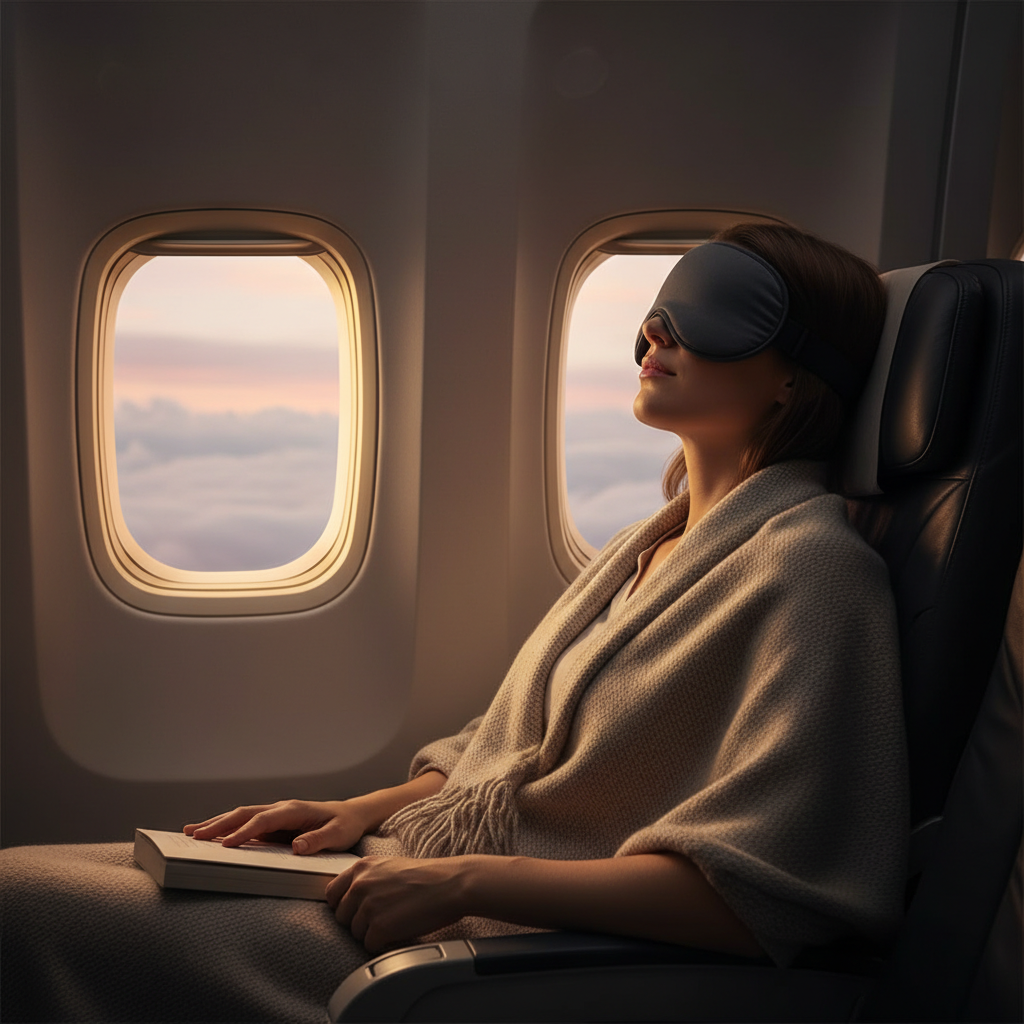
Below is a practical guide for light sleepers: which materials and shapes tend to work, how to spot a true blackout fit, and what to choose for planes, trains, road trips, and bright rooms. I’ll also call out common buying mistakes, because eye masks are one of those items where “more expensive” does not always mean “more sleep.”
What light sleepers usually need (and what they don’t)
Light sleepers often blame themselves, but travel sleep is a rough setup: unfamiliar noise, temperature changes, and random light bursts. Your eye mask can’t fix everything, but it can remove the most predictable trigger, stray light.
According to the Sleep Foundation, light exposure can interfere with sleep by affecting the body’s circadian rhythm. That doesn’t mean you must sleep in total darkness forever, but when you’re trying to nap at 2 p.m. on a flight, darkness helps.
- You probably need: true blackout coverage, low pressure on eyes, a strap that doesn’t slip, skin-friendly fabric, easy packability.
- You probably don’t need: heavy “spa” masks that trap heat, gimmicky aromatherapy inserts, or overly tight compression.
The 5 features that make an eye mask actually “best” for light sleepers
If you only remember one section, make it this one. These features separate an eye mask that looks good in photos from one you’ll still use six months later.
1) True blackout seal, especially around the nose
Most light leaks happen at the nose bridge and inner corners. A “one-piece flat mask” can work, but it needs a flexible nose cut or padded contour that molds without gaps.
- Look for: a shaped nose area, wider coverage, or a soft foam edge.
- Avoid: stiff seams right over the nose that lift when you smile or talk.
2) Zero pressure on eyelids (especially if you blink awake easily)
Many light sleepers hate the sensation of fabric touching lashes and lids. Contoured or “3D” eye cups usually help, but only if the cup depth matches your face.
- Look for: contoured cups, soft edge padding, and enough depth for eyelashes.
- Watch out for: deep cups with hard rims that dig in when side-sleeping.
3) Strap stability without headache
A secure fit matters more on the move. If the mask slides, you’ll keep micro-waking to adjust it. If it’s too tight, you’ll feel it in your temples.
- Look for: adjustable strap, ideally with a flat adjuster that won’t press into your headrest.
- Nice bonus: a split-strap design for better stability, if you toss and turn.
4) Breathable, skin-friendly fabric
Planes run dry, trains can run warm, and hotel rooms vary. Breathable fabrics (often cotton blends, bamboo viscose, or moisture-wicking microfiber) reduce sweat and irritation.
- For sensitive skin: prioritize smooth lining and minimal rough stitching.
- If you wear makeup: darker lining helps hide smudges, but a smoother fabric reduces transfer.
5) Packability and cleanability
If you can’t keep it clean, you’ll stop using it. Travel masks should survive being stuffed into a personal item and still feel pleasant on your face.
- Look for: machine-washable or at least easy hand-wash fabric.
- Consider: a small pouch if you travel often.
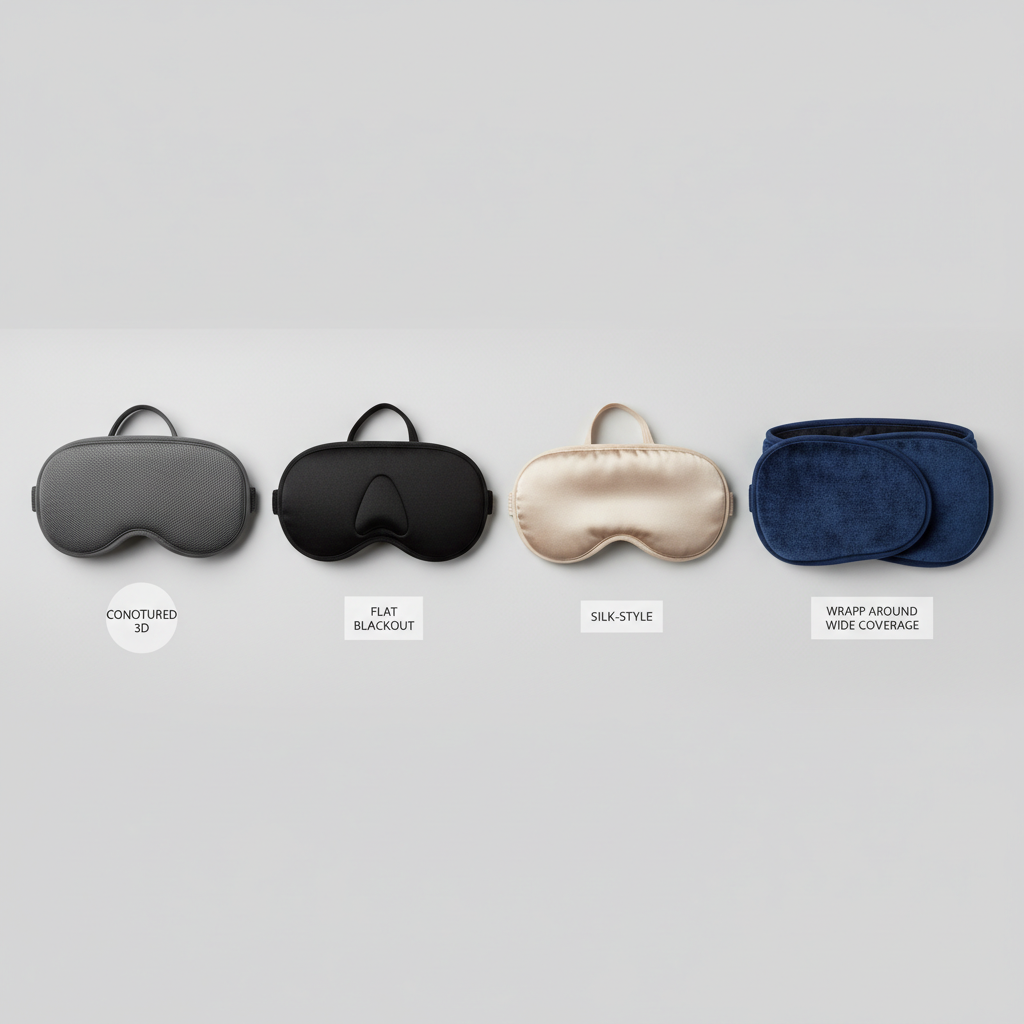
Quick comparison table: which eye mask style fits your situation?
There’s no single best travel eye mask for light sleepers in every scenario. This table is a fast shortcut to the style that tends to match your constraints.
| Mask style | Best for | Potential downside |
|---|---|---|
| Contoured / 3D eye-cup | Lash comfort, no eyelid pressure, long flights | Can leak light if nose area fits poorly |
| Flat blackout with nose cut | Minimal bulk, easy packing, back sleepers | May press on lids, can smudge mascara |
| Wraparound / wide coverage | People who get side light in hotel rooms | More heat, can feel “too much” for some |
| Silk or satin-forward | Sensitive skin, frizz control, gentle feel | Sometimes slips more, not always full blackout |
| Foam-padded blackout | Strong light blocking, budget-friendly | Can trap heat, bulkier in a bag |
A self-check list: pick the right mask in 2 minutes
If you’re not sure what to buy, answer these quickly. Your pattern usually points to one or two styles.
- Do your eyes feel “tired” from pressure? Favor contoured eye-cups or very soft flat masks with deep padding at the edges.
- Do you wake up from tiny light leaks? Prioritize nose-bridge sealing and wider coverage, even if it adds bulk.
- Do you sleep on your side? Avoid hard rims and bulky buckles, look for soft edges and flat adjusters.
- Do you get hot easily? Skip thick foam and consider breathable linings, lighter padding, or silk-like feel.
- Do you have long lashes or lash extensions? Contoured cups help, but check cup depth and edge softness.
- Do you use earbuds or over-ear headphones? Choose a strap that doesn’t collide with ear hardware, a split-strap can help.
One extra check that people forget: if you plan to use it in hotels, test it with your bedside lamp on. The best travel eye mask for light sleepers should keep you in the dark even when light hits from the side.
How to test an eye mask for blackout fit (before you travel)
This is the “save yourself a bad flight” step. You can test at home in a minute, and you’ll learn more than any product description tells you.
- Step 1: Put the mask on in a lit room, adjust the strap until it feels stable but not tight.
- Step 2: Face a bright lamp, then turn your head left and right. If you see light streaks, note where they enter.
- Step 3: Press gently around the nose bridge. If light disappears only when you press, the fit likely won’t hold during sleep.
- Step 4: Lie on your side and roll a little. If the edge folds and opens a gap, try a wider mask or softer edge foam.
If you wear contacts or have dry eyes, be cautious with masks that touch eyelids. According to the American Academy of Ophthalmology, dry eye can be affected by airflow and environment; a mask that irritates your eyes may make rest harder, not easier. If you have ongoing eye discomfort, it’s reasonable to ask a clinician what’s appropriate for you.
Scenario-based picks: what usually works on planes, trains, and hotels
Here’s the practical part. You can buy the “right” mask and still hate it if the travel context differs.
On airplanes (overhead lights, seat position changes)
- Usually works well: contoured eye-cup with stable strap, medium-width coverage.
- Why: avoids eyelid pressure when you’re upright, keeps lashes from brushing fabric.
- Tip: pair with a brimmed hat or hoodie if you’re extremely light-sensitive, it reduces side light.
On trains and buses (frequent jolts, naps)
- Usually works well: strap-forward designs that don’t slide, slightly tighter but still comfortable.
- Why: movement tends to shift flat masks off-center.
- Tip: avoid masks with bulky adjusters that press into your headrest.
In hotels (light leaks from curtains, hallway glare)
- Usually works well: wide coverage or flat blackout with strong nose seal.
- Why: hotel light often hits from the side and above, not straight on.
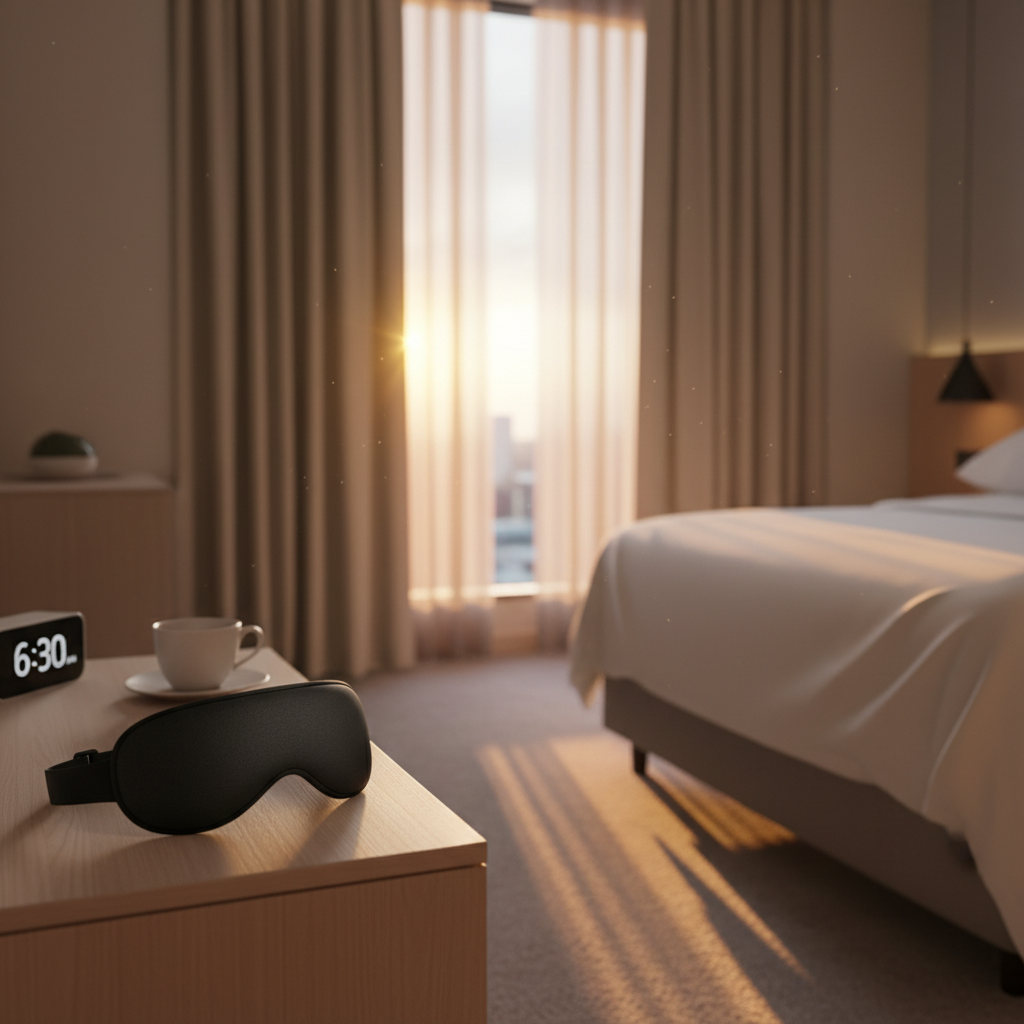
- Tip: if you wake at sunrise, combine mask + a small clip to close curtain gaps.
Practical tips to sleep better with an eye mask (small tweaks, big payoff)
Even the best travel eye mask for light sleepers can feel “off” if you put it on at the wrong time or fit it poorly. These are low-effort adjustments that tend to help.
- Put the mask on before you feel sleepy: you’ll notice pressure points while you’re still awake and can adjust calmly.
- Keep the strap higher on the back of your head: it often reduces slipping, especially for smooth hair.
- If you get hot: choose a breathable mask and slightly loosen the strap, then use a hoodie or blanket to reduce side light instead of over-tightening.
- Use earplugs or noise-canceling wisely: light and noise often team up, fixing only one may not be enough for sensitive sleepers.
- Bring a backup: a compact flat mask as a spare can save you if your primary mask gets lost or damp.
Mistakes that make “good” eye masks fail for light sleepers
Most returns and abandoned purchases come from a few predictable misreads.
- Buying for material only: silk can feel amazing, but a poor nose seal still leaks light, and light sleepers notice that instantly.
- Over-tightening to chase blackout: it can cause pressure headaches or worsen sleep quality; adjust the shape and seal instead.
- Ignoring your sleep position: side sleepers often need softer edges and low-profile adjusters, not just thicker padding.
- Assuming “3D” always means better: some contoured designs create gaps on smaller faces.
- Not washing regularly: oils and skincare residue can irritate skin; cleanability matters more than people think.
When it’s worth getting extra help
If you’re doing all the right travel-sleep basics and still can’t rest, it might not be a gear problem. According to the Centers for Disease Control and Prevention (CDC), sleep health affects overall well-being, and persistent sleep issues can be worth discussing with a healthcare professional.
- If bright-light sensitivity feels extreme or triggers pain, consider checking in with an eye-care professional.
- If you snore heavily, wake gasping, or have ongoing daytime sleepiness, ask a clinician about screening for sleep disorders.
- If you get frequent headaches from straps or pressure, try a different mask style and talk to a professional if symptoms persist.
Key takeaways and a simple buying plan
Picking the best travel eye mask for light sleepers is less about hype and more about fit: seal around the nose, comfort on the eyelids, and a strap that stays put without squeezing.
- If eyelid pressure bothers you: start with a contoured eye-cup style, then test for nose leaks.
- If light leaks wake you up: prioritize wide coverage and a reliable nose bridge seal, even if it’s less sleek.
- If you move a lot in sleep: choose stability and a low-profile strap over fancy fabrics.
Your next step is simple: pick one style from the table, do the lamp test at home, and only then decide if you need a different shape. That small test saves the most time and money.
FAQ
- What is the best travel eye mask for light sleepers on long flights?
Many light sleepers do well with a contoured eye-cup mask because it blocks light without pressing on eyelids, which matters when you’re upright and shifting positions. - Do “blackout” eye masks really block 100% of light?
Some come close, but real-world blackout depends on your face shape and the nose area seal. A quick lamp test at home tells you more than the label. - Is silk better than cotton for a travel sleep mask?
Silk often feels smoother on skin and can be gentler, but cotton blends can breathe well and grip slightly better. For light sleepers, fit tends to matter more than fabric alone. - Why does my eye mask keep slipping off at night?
Common reasons are a strap that’s too loose, a slick fabric, or a bulky adjuster that shifts on a pillow or headrest. A flatter adjuster and a slightly higher strap position can help. - Can an eye mask cause headaches?
It can, especially if you tighten it to force a seal or if the edge presses on temples. Try a different shape or softer edge, and consider talking with a professional if headaches continue. - What eye mask works best for side sleepers who are light sensitive?
Look for soft edges, low-profile hardware, and enough width to block side light. Some wide-coverage masks work well, but avoid stiff rims that dig in. - How do I clean a travel eye mask safely?
Follow the care label. Many can be hand-washed with mild soap and air-dried; keeping it clean reduces skin irritation, which can otherwise make you wake more easily.
If you’re trying to build a small “sleep kit” for travel, an eye mask is usually the easiest win, but pairing it with a lightweight layer for warmth and a simple noise plan often makes the difference between dozing and actually sleeping.