
earplugs travel noise cancel is usually what people mean when they want quiet on planes, in hotels, or on loud commutes without carrying bulky gear.
If you’ve ever tried to sleep through cabin announcements, a snoring seatmate, or a thin hotel wall, you already know the frustration: you don’t need perfect silence, you need noise turned down enough that your body can actually rest.
This guide helps you choose the right travel earplugs, get the fit right, and avoid the common mistakes that make people think earplugs “don’t work.” You’ll also get a simple packing checklist and a quick comparison table.
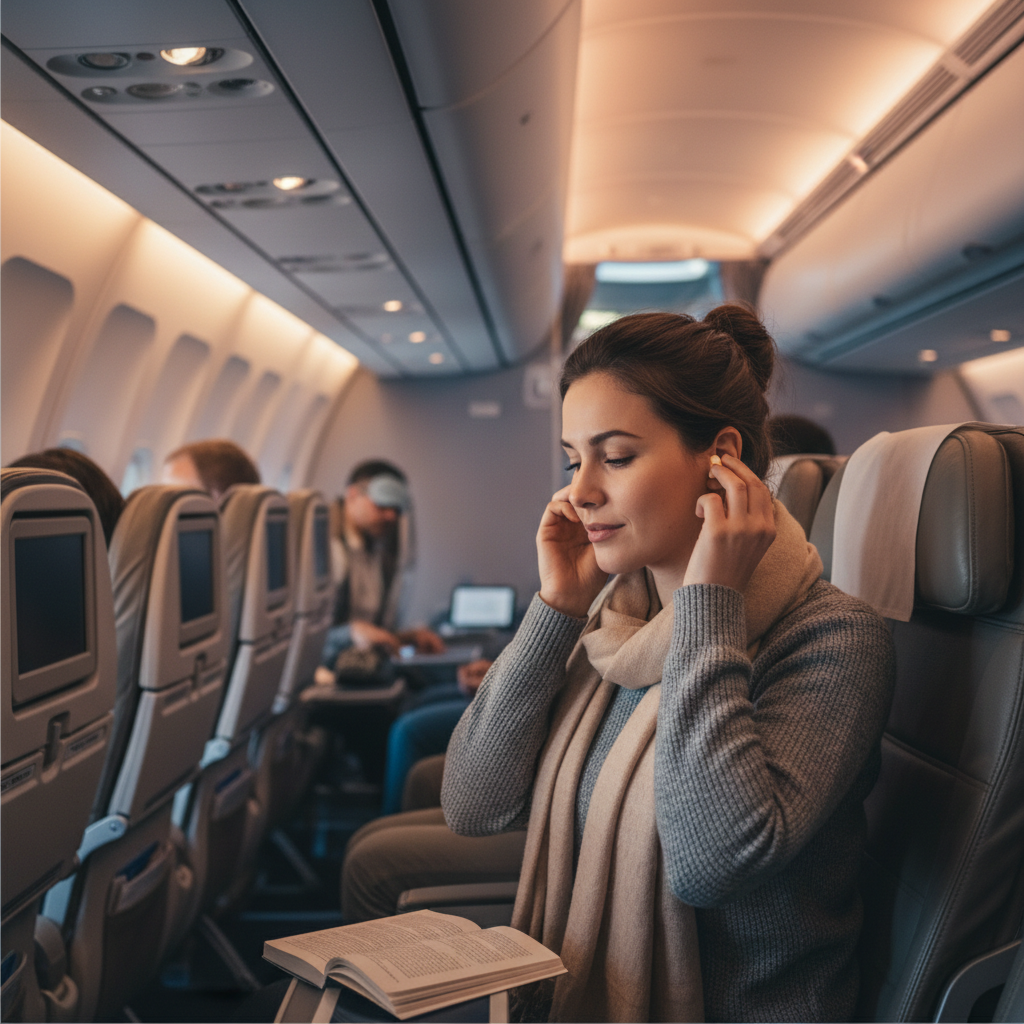
What earplugs can (and can’t) do for travel noise
Earplugs reduce sound intensity, they don’t erase sound. That difference matters because travel noise comes in different flavors: steady low-frequency rumble from engines, sudden speech bursts, and sharp clanks from doors or carts.
Most earplugs are best at mid-to-high frequencies, like voices and clattering. They often help with engine rumble too, but that low-frequency sound may still feel present, just less exhausting.
According to OSHA, hearing protection is commonly rated with a Noise Reduction Rating (NRR), which is a lab-based estimate and tends to be higher than what many people achieve in real life because fit varies.
- Realistic goal: less disruption, easier sleep, calmer nervous system.
- Unrealistic goal: complete silence in a loud cabin or street-facing room.
Why travel earplugs feel “ineffective” (it’s usually fit, not the plug)
Most complaints trace back to one thing: a leaky seal. Even a small gap can let in enough noise that you feel like nothing changed.
Common real-world causes
- Wrong size: too small slips out, too big never seals and can hurt.
- Incorrect insertion depth: foam needs to sit deeper than many first-timers expect.
- Jaw movement: chewing or talking can break the seal, especially with shallow fits.
- Dirty or worn plugs: silicone gets slick, foam loses resilience after repeated use.
- Mismatch to the noise: you may be trying to “cancel” bass-heavy rumble with a plug that shines with voices.
Also, comfort is a performance issue. If a plug aches after 20 minutes, you won’t keep it in long enough for it to matter.
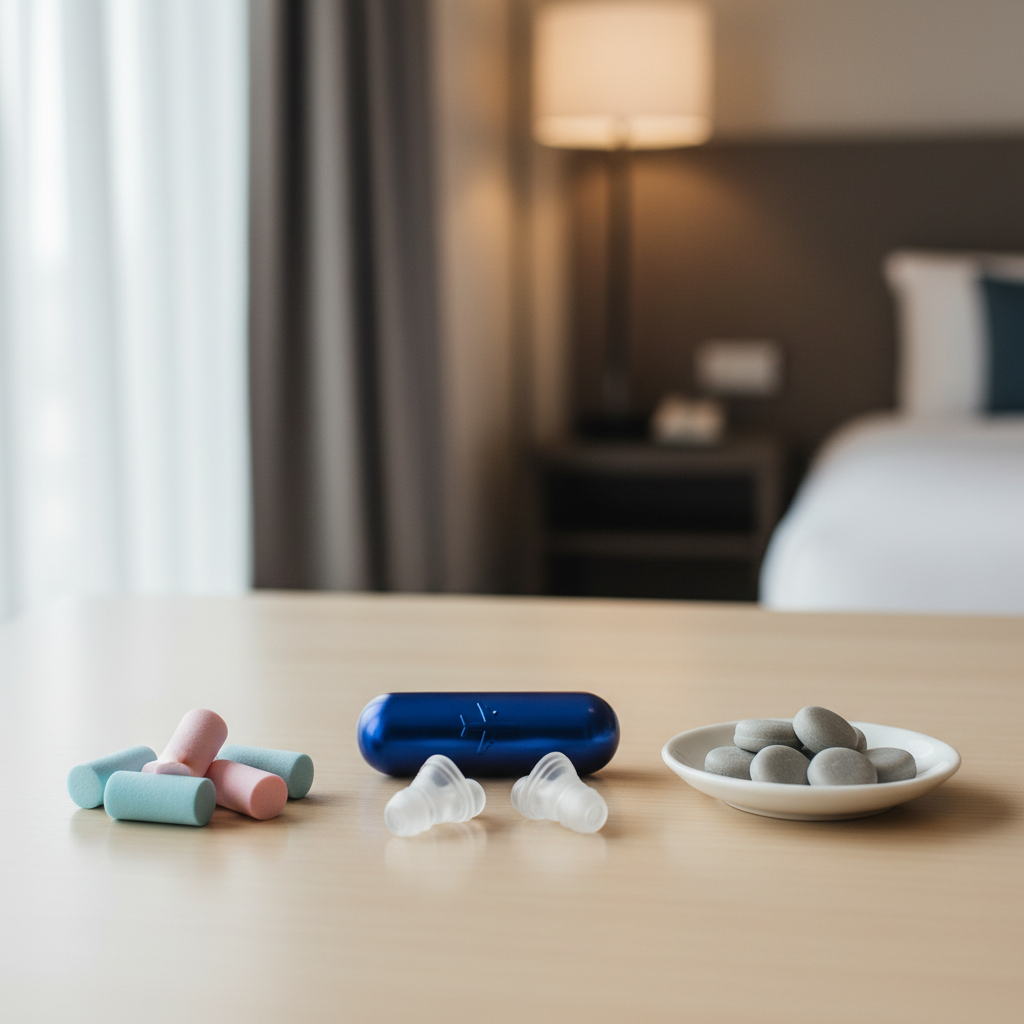
Choosing the right type: foam vs silicone vs filtered plugs
There isn’t one “best” option. What works depends on your ear shape, how you sleep, and what kind of noise is bothering you most.
| Type | What it’s good for | Tradeoffs | Who usually likes it |
|---|---|---|---|
| Foam (disposable) | Strong overall reduction, good for planes and snoring | Fit sensitive, can feel “plugged,” not great if inserted shallow | Light sleepers who prioritize maximum quiet |
| Silicone (reusable, flanged) | Consistent fit for many ears, easy to insert quickly | May reduce less than foam for some people, can press in side-sleeping | Frequent travelers who want quick, repeatable use |
| Moldable silicone/wax | Comfort for side sleepers, seals outer ear well | Less durable, can pick up lint, not for deep insertion | People who hate in-canal pressure |
| Filtered “musician” style | Turns volume down while keeping speech clearer | Often not as quiet as foam, costs more | Travelers who want reduced noise but still hear announcements |
If your main aim is sleep on a red-eye, foam often wins on raw reduction. If you need awareness for boarding calls, filtered plugs can be a better balance.
A quick self-check: what’s your travel noise problem?
Use this to avoid buying the wrong solution. It’s not fancy, but it prevents most frustration.
- I wake up from voices or hallway noise: start with well-fitted foam, consider white noise as a backup.
- I can’t fall asleep because of engine hum: foam or silicone, plus over-ear headphones if you already carry them.
- Ear canals get sore fast: try moldable options or smaller-size foam, and limit wear time.
- I need to hear alarms/announcements: filtered plugs, or use one plug in the ear facing the noise source.
- I lose earplugs constantly: get a bright case, attach it to a keychain, pack spares.
How to insert earplugs correctly (the part most people skip)
If you only change one thing, change this. Proper insertion is what turns “meh” into “oh, that’s better.”
Foam earplugs: a reliable method
- Roll the plug into a tight, smooth cylinder, not a crumpled ball.
- Reach over your head and gently pull the outer ear up and back to straighten the ear canal.
- Insert and hold in place 20–30 seconds while foam expands.
- Do a quick check: your own voice should sound noticeably deeper, and the plug should not stick far out.
Silicone flanged earplugs
- Insert with a slight twist until the flanges seal, avoid forcing too deep.
- If the seal breaks when you move your jaw, try a different size tip if available.
Key point: discomfort usually means wrong size or too much pressure, not “needing to get used to it.” If pain persists, stop and consider a different style, and if you have ear issues, it’s reasonable to ask a healthcare professional.
Practical travel setups: plane, hotel, and public transit
People search earplugs travel noise cancel because the setting keeps changing. Here are setups that work in many situations without overcomplicating your bag.
On a plane
- For sleep: foam plugs + eye mask, and if you already own over-ear headphones, layer them on top (no music required).
- For announcements: filtered plugs, or keep one ear unblocked during boarding then switch to both after takeoff.
- For pressure comfort: some travelers prefer vented or filtered designs during ascent/descent, but results vary by person and product.
In a hotel or rental
- Ask for a quieter room when possible, earplugs work best when they’re not fighting a nightclub across the street.
- Use foam if the issue is voices or doors, add a phone-based white noise app if you still catch spikes.
On trains and buses
- Filtered plugs can reduce fatigue while letting you hear your stop call in many cases.
- If safety is a concern, lower reduction and situational awareness may be the smarter trade.
Safety, hygiene, and comfort: what to watch for
Earplugs are generally low-risk, but travel adds long wear time, dry cabin air, and less-than-ideal cleanliness. Be a bit picky here.
- Keep them clean: wash reusable silicone per manufacturer guidance, replace foam regularly.
- Avoid sharing: it increases infection risk.
- Don’t force removal: twist slowly; if a plug feels stuck or you suspect wax impaction, consider professional help.
- Be mindful of alarms: if you need to wake for a flight or must hear an emergency alarm, set strong vibration alarms and consider lower attenuation options.
According to CDC guidance on hearing protection, reducing exposure to loud noise helps protect hearing health. If you travel through very loud environments, earplugs can be part of that risk reduction, though the right choice depends on the situation.
Key takeaways and a simple packing checklist
If you want earplugs that actually help, treat fit like the main feature, not a footnote. Once the seal is right, the rest becomes preference.
- Choose by scenario: foam for maximum quiet, filtered for awareness, moldable for comfort.
- Practice before travel: don’t make your first attempt on a red-eye.
- Carry spares: small case, two pairs, and a backup pair in your day bag.
Quick checklist
- 2–3 pairs of earplugs (primary + backups)
- Small case (bright color helps)
- Eye mask (optional but useful)
- White noise app downloaded offline (optional)
If your next trip includes long flights or thin hotel walls, pick one style that matches your main pain point and test the fit at home for a few nights, that alone solves more problems than buying the most expensive option.
FAQ
Do earplugs really work for airplane engine noise?
They often help, especially by taking the edge off steady cabin sound, but that low-frequency rumble may not disappear. Many travelers find foam plugs plus over-ear headphones feels calmer than either alone.
What NRR should I look for when buying travel earplugs?
NRR can be a helpful comparison tool, but real-life reduction depends heavily on fit. If you struggle with sealing, a slightly lower-rated plug that fits well may beat a higher-rated plug that leaks.
Are filtered earplugs good for travel?
They can be, particularly if you want reduced noise while still catching announcements or conversations. They’re not always the top pick for sleeping next to a snorer, where stronger attenuation usually matters more.
How do I know if my earplugs are inserted correctly?
Your voice should sound more internal and bass-heavy, and outside noise should drop noticeably without pain. If the plug sticks far out or loosens when you open your jaw, the seal is probably weak.
Can I sleep on my side with earplugs?
Many people can, but comfort varies by ear shape and pillow firmness. Moldable wax or low-profile silicone options often feel better for side sleepers than long foam cylinders.
Is it safe to wear earplugs all night?
For many people it’s fine occasionally, but irritation or earwax buildup can happen. If you get recurring pain, drainage, or hearing changes, it’s smart to stop and consult a healthcare professional.
What’s the best way to keep earplugs from falling out during a flight?
Usually it comes down to using the right size and holding foam in place long enough to expand. If you move a lot while sleeping, a slightly deeper insertion and a stable pillow or neck support can help.
If you’re trying to make earplugs travel noise cancel work for your specific route and sleep style, it can be easier to narrow it down to two contenders and test them before departure, that small bit of prep tends to beat panic-buying a random pair at the airport.