
how to clean sunglasses lens properly comes down to two things most people skip: removing grit before wiping, and using materials that won’t abrade lens coatings.
If you’ve ever “cleaned” your sunglasses only to end up with haze, streaks, or tiny scratches you can’t unsee, you’re not alone. A lot of the damage happens during cleaning, not during wear, especially with mirrored or anti-reflective coatings.
This guide keeps it practical, what to do at home, what to carry in a bag or car, what to avoid, and when it’s smarter to ask an optician for help. You’ll also get a quick tool-and-solution table so you can stop guessing.
Why lenses get streaky or scratched after “cleaning”
The annoying part is you can do the “right” motion and still get a bad result, because the problem usually starts earlier in the process.
- Dust acts like sandpaper, wiping dry lenses can drag grit across the surface.
- Coatings are tougher than they look, but not invincible, anti-reflective, mirror, and oleophobic layers can wear if you use harsh cleaners or rough cloth.
- Skin oils smear, especially near the nose pads and temple tips, so you keep chasing streaks with more wiping.
- Paper products shed fibers, tissues and paper towels leave lint and can be more abrasive than you expect.
According to the American Optometric Association (AOA), you should avoid harsh household cleaners on lenses because they can damage lens coatings. That single point explains a lot of “why do my lenses look worse now?” moments.
What to use (and what to avoid): quick reference table
If you want fewer variables, stick to a short list of tools and cleaners that tend to behave well across most sunglasses materials.
| Item | Good for | Watch-outs |
|---|---|---|
| Microfiber cloth (clean, dedicated) | Daily drying and polishing | Dirty cloth = scratches; wash without fabric softener |
| Mild dish soap + lukewarm water | Oils, sunscreen residue, salt spray | Avoid soaps with heavy moisturizers or lotions |
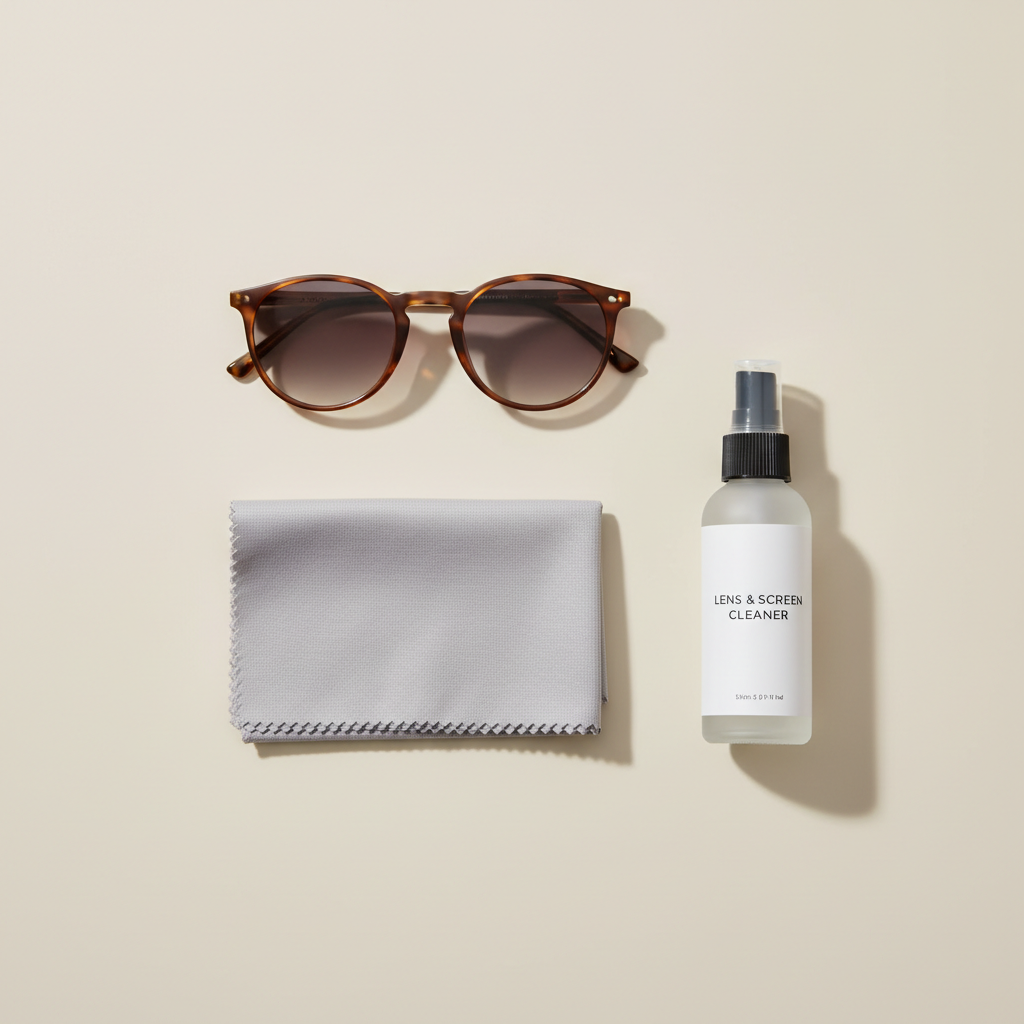
| Lens cleaning spray (optical-safe) | On-the-go quick clean | Check label for coated lenses; avoid “ammonia” |
| Soft running water | Rinsing grit before wiping | Hot water can stress coatings on some lenses |
| Paper towels / napkins | Emergency only | Higher scratch risk and lint |
| Window cleaner, vinegar mixes, alcohol blends | Generally not recommended | May degrade coatings; label rarely matches eyewear needs |
If you’re unsure what coatings you have, assume they’re there and clean gently. Many sunglasses now come with at least a basic protective layer even when it isn’t advertised loudly.
A fast self-check: which cleaning situation are you in?
Before you clean, take ten seconds to figure out what kind of “dirty” you’re dealing with. It changes the right approach.
- Dry dust or grit: lenses look dull, you see specks in sunlight, and wiping makes it worse.
- Oily smears: fingerprints, sunscreen, makeup, cooking grease, you get rainbow-like streaks.
- Water spots: dried rain or hard water, circular marks that don’t move with light wiping.
- Beach or pool residue: salt spray, chlorine, sticky film, often near edges and hinges.
If you see grit, start with a rinse. If it’s oil, soap matters more than “wiping harder.” If it’s water spots, you may need a second rinse and a cleaner cloth, not a stronger chemical.
Step-by-step: how to clean sunglasses lens properly at home
This is the routine that usually keeps coatings happy and reduces streaks. It’s not complicated, it’s just ordered.
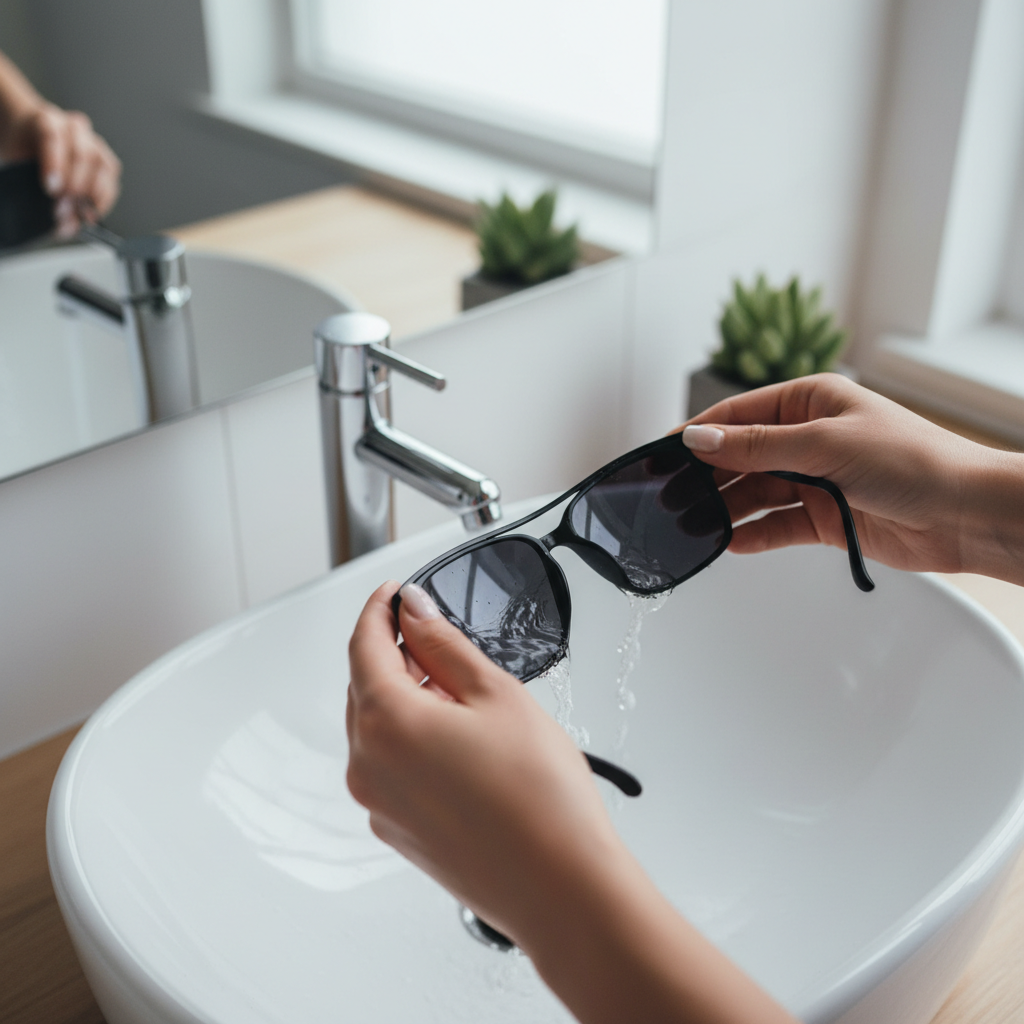
1) Rinse first (especially if you were outside)
Hold the sunglasses under a gentle stream of lukewarm water to flush away dust. This is the scratch-prevention step that pays off.
2) Use a small drop of mild dish soap
Put a drop on your fingertips, lightly clean both sides of each lens, then sweep around the nose pads and frame edges where oils collect. If you wear sunscreen, this part matters more than you think.
3) Rinse thoroughly
Any soap left behind can create haze. Rinse until the surface “sheets” cleanly and you don’t feel slick spots.
4) Dry with a clean microfiber cloth
Blot first, then gently polish in small circles. If you keep getting streaks, the cloth is often the culprit, it may be saturated with oil or laundry residue.
5) Quick final check in angled light
Look at the lenses near a window or bright lamp. If you see a stubborn smear, a tiny spritz of lens-safe cleaner on the cloth (not directly on the lens) often solves it.
According to the American Academy of Ophthalmology (AAO), mild dish soap and water is a safe option for cleaning eyeglasses, and the same approach generally works well for sunglasses with coated lenses.
On-the-go cleaning without making things worse
You can’t always get to a sink, and that’s when people reach for a shirt hem or a napkin, then wonder why their lenses look scuffed.
- Shake or blow off dust before touching the lens, even a quick puff helps.
- Use a pre-moistened lens wipe labeled for eyewear, and use light pressure.
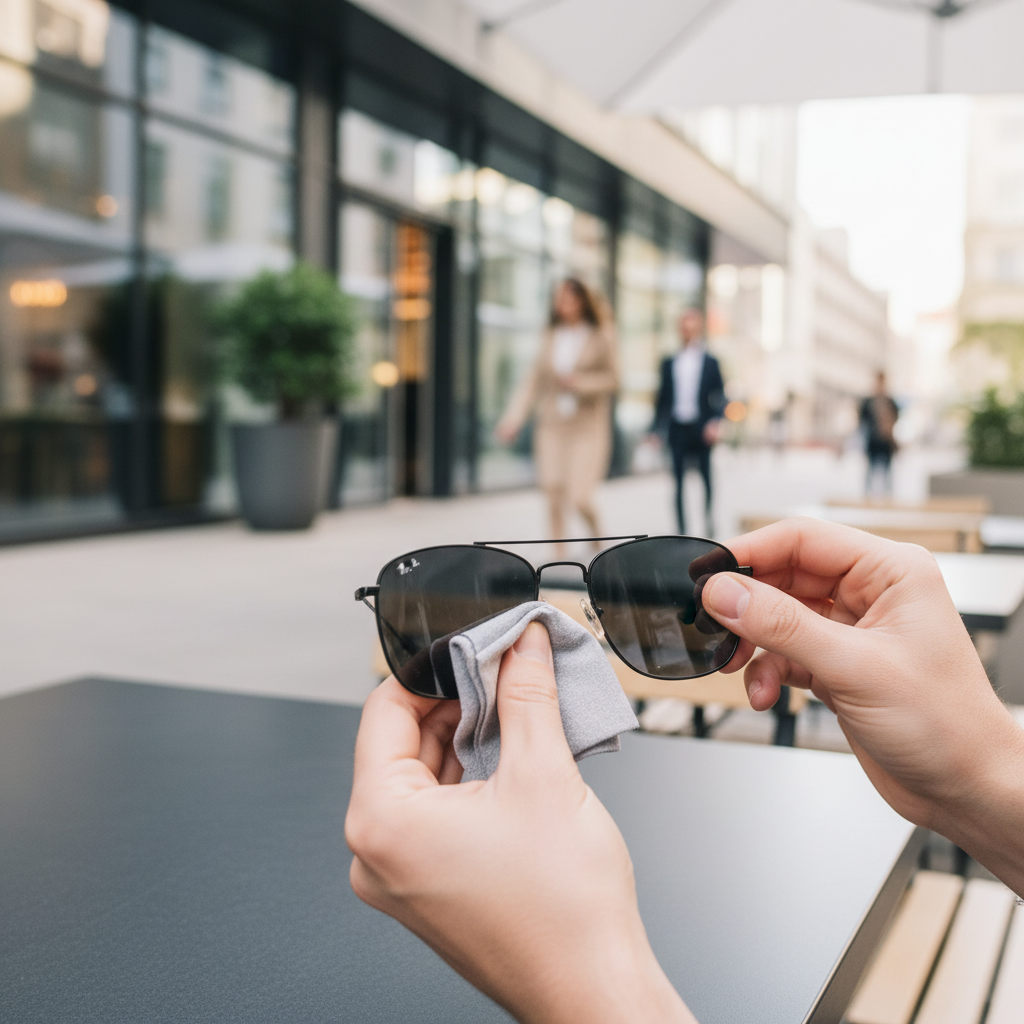
- Use a microfiber cloth you trust, stored in a case or a clean pouch, not loose in a pocket with keys.
- Avoid “dry buffing” if the lens has visible grit, wait until you can rinse.
If you need how to clean sunglasses lens properly while traveling, the single best habit is carrying one clean microfiber cloth and not letting it become a general-purpose rag.
Common mistakes that shorten lens life
Most “mistakes” aren’t dramatic, they’re just small habits repeated every day.
- Using window cleaner or ammonia-based sprays, these can be rough on coatings and frame finishes.
- Cleaning with a dirty microfiber cloth, it picks up grit over time, especially if you set it down on countertops.
- Washing cloth with fabric softener, it can leave a residue that causes smears and reduces absorbency.
- High heat, leaving sunglasses on a hot dashboard can warp frames and may stress certain lens coatings.
- Spraying cleaner directly onto lenses, liquid can seep into frame edges on some styles; spraying on the cloth is usually safer.
If you’re consistently getting micro-scratches, don’t just change technique, change your cloth routine too. Keep two cloths, one for daily use, one “clean backup,” and rotate them.
Troubleshooting: haze, water spots, and stubborn films
Sometimes you do everything “right” and the lens still looks off. That’s usually a clue about residue type, or about coating wear.
Haze that returns right after drying
- Rinse longer, leftover soap causes a soft foggy look.
- Wash the microfiber cloth, avoid softener and dryer sheets.
- Try a lens-safe spray once, then dry with a different cloth.
Hard water spots
- Rinse with clean water, then dry immediately to prevent re-spotting.
- If spots persist, a dedicated eyewear cleaner often works better than more pressure.
Sticky film from sunscreen or hair products
- Use mild dish soap, spend extra time around the top edge of the lenses and nose pads.
- Repeat once rather than scrubbing harder.
When troubleshooting how to clean sunglasses lens properly, pressure is rarely the answer. Cleaner rinsing, cleaner cloth, and a second pass usually beat “elbow grease.”
When to seek professional help (and what to ask for)
If you notice rainbow patches that won’t clean off, peeling at the edges, or a cloudy area that looks embedded, the coating may be worn or damaged. At that point, stronger cleaning often makes it more obvious.
- Optical shop cleaning: many opticians can do a careful clean and inspect coatings under proper light.
- Ultrasonic cleaning for frames: helpful for nose pads and hinges, though lenses still need coating-safe handling.
- Lens replacement: for premium sunglasses, replacing lenses can be more reasonable than replacing the whole frame.
If you have prescription sunglasses, or if you’re unsure about a mirrored/anti-reflective coating, it’s reasonable to ask an optician what cleaners they recommend for that exact lens type.
Key takeaways and a simple routine you can stick with
If you want a routine that holds up, keep it boring: rinse, mild soap when needed, dry with a clean microfiber cloth, and avoid household cleaners. That’s the core of how to clean sunglasses lens properly without turning cleaning into the thing that ruins your lenses.
- Rinse before wiping when there’s any chance of grit.
- Soap beats scrubbing for oils, sunscreen, and makeup residue.
- Microfiber quality and cleanliness matters as much as the cleaner.
- When in doubt, gentler wins, coatings can be surprisingly easy to irritate.
Pick one action to do today: wash your microfiber cloths correctly, or stash a lens-safe wipe pack in your bag so you stop using whatever paper is nearby.