
Travel makeup bag essentials come down to one thing: you want a kit that handles real-life travel (leaks, time changes, tiny hotel sinks) without turning your carry-on into a cluttered mess. If your current routine is “throw everything in and hope,” you’re not alone—and it’s usually why things break, spill, or get forgotten.
What makes this worth dialing in is that a travel kit isn’t just your everyday makeup in a smaller bag. Travel adds new constraints: TSA liquid rules, limited counter space, lighting that’s never flattering, and the annoying reality that you may need to get ready in five minutes.
Below is a practical, women-focused packing list that stays flexible. I’ll show you what to bring, what to skip, and how to build a kit around your trip length, climate, and plans, plus a quick table you can screenshot before your next flight.
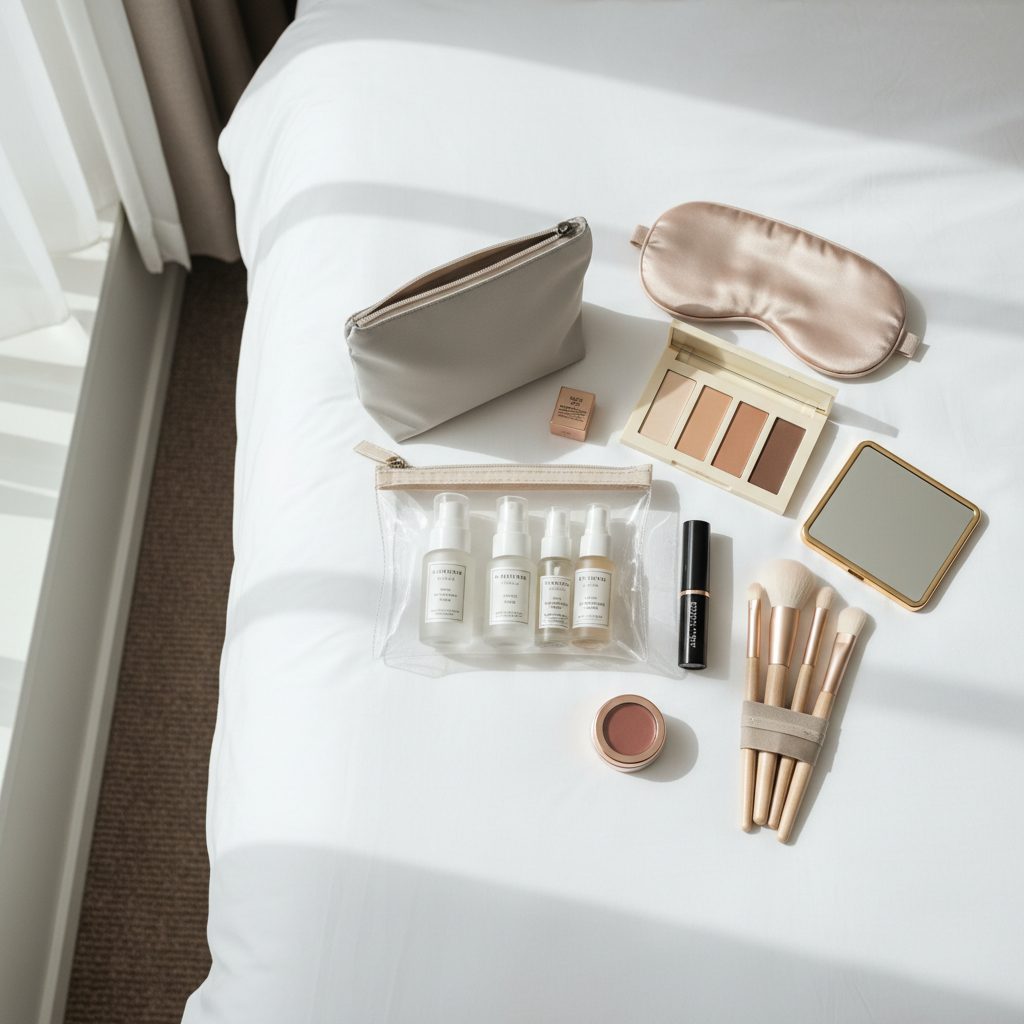
Start with your “trip reality,” not your vanity
Before you pack products, decide what the trip demands. A long weekend wedding in Miami and a week of conferences in Chicago require different priorities, even if your everyday makeup stays the same.
- Trip length: Short trips reward multi-use items, longer trips reward backups and better hygiene.
- Activities: Work meetings, hiking, nightlife, beach time—each changes what “essential” means.
- Climate and season: Humidity pushes you toward long-wear and anti-frizz, dry air pushes you toward barrier-repair and richer hydration.
- Getting-ready conditions: Will you have a bathroom counter, or will you be doing makeup in a car mirror?
If you answer those four honestly, your travel makeup bag stops being a random mini Sephora and becomes a tool.
The core travel makeup bag essentials (what most women actually use)
Most travel routines work best when you anchor them with a tight “core,” then add 2–4 fun or event-specific items. The list below covers the core that tends to earn its space.
Base and complexion
- Tinted moisturizer or skin tint (more forgiving than full foundation in weird lighting)
- Concealer (under-eyes + spot coverage)
- Setting powder or blotting sheets (choose based on your skin type)
- Cream blush (doubles as lip color in a pinch)
- Highlighter (optional, but great for looking awake fast)
Eyes and brows
- Neutral eyeshadow stick or tiny palette (1–4 shades is plenty)
- Mascara (consider travel-size to reduce drying out)
- Brow pencil or tinted gel
- Mini lash curler if you use one at home
Lips
- Hydrating lip balm
- One “day” shade (nude/rose)
- One “night/event” shade (optional, but it’s the easiest upgrade)
The trick is resisting duplicates. One reliable mascara beats three “maybe” mascaras that take up space and still smudge.
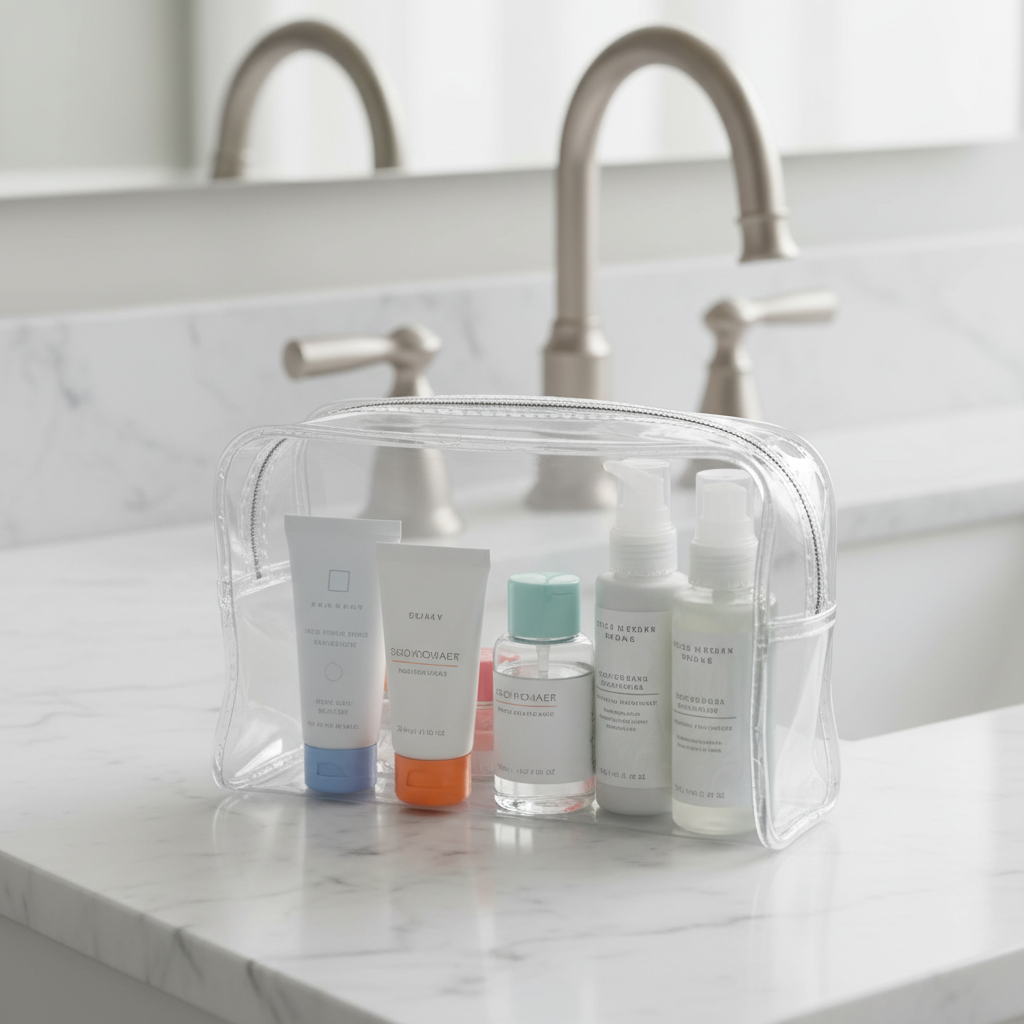
Skincare and prep: the “makeup looks better” part
When travel makeup looks off, it’s often not the makeup. It’s skin prep—dehydration from flights, sunscreen you’re not used to, or sleeping in a different climate.
- Gentle cleanser (a travel tube, not a new harsh formula)
- Moisturizer appropriate for your destination weather
- Sunscreen you already tolerate
- Makeup remover (micellar water or cleansing balm mini)
- Simple lip and eye hydration for flights and dry hotel air
According to U.S. Transportation Security Administration (TSA), liquids, aerosols, gels, creams, and pastes in carry-on bags generally need to follow the 3-1-1 rule (3.4 oz containers, 1 quart bag, 1 per person). If you’re unsure whether something counts as a liquid, TSA guidance is worth checking before you pack.
If you’re acne-prone or reactive, travel is not the moment to “test” a new active. Many dermatologists recommend introducing new skincare gradually; if you’re managing a medical skin condition, it’s reasonable to ask a clinician what’s safe for you.
A screenshot-worthy checklist table (by category)
If you want a fast way to pack, use this as your baseline and adjust based on plans. Think of it as your default “travel makeup bag essentials” template.
| Category | Essentials | Nice-to-have |
|---|---|---|
| Prep | Cleanser, moisturizer, sunscreen | Hydrating mist, eye patches |
| Base | Skin tint, concealer, powder/blotting | Primer, setting spray |
| Color | Cream blush, one lip color | Bronzer, highlighter |
| Eyes/Brows | Mascara, brow pencil/gel, shadow stick | Eyeliner, mini lash curler |
| Tools | 1–3 brushes, sponge, tweezers | Brush guard, mini mirror |
| Hygiene | Hand sanitizer, brush wipe | Small towel, cotton swabs |
How to choose the right bag (and avoid the usual mess)
The bag matters more than people think. A cute pouch that collapses into a black hole leads to broken powders and lost lipsticks.
- Structure helps: A semi-rigid bag keeps compacts safer in overhead bins and backpacks.
- Separate liquids: Keep skincare and liquid makeup in a clear pouch, even if checked luggage is your plan.
- Easy-to-clean lining: Spills happen; wipeable interiors save your sanity.
- Compartments that match your routine: One section for base, one for eyes, one for tools is usually enough.
Also, be honest about your patience level. If you dislike “organizing,” choose a bag with built-in dividers so you don’t have to think.
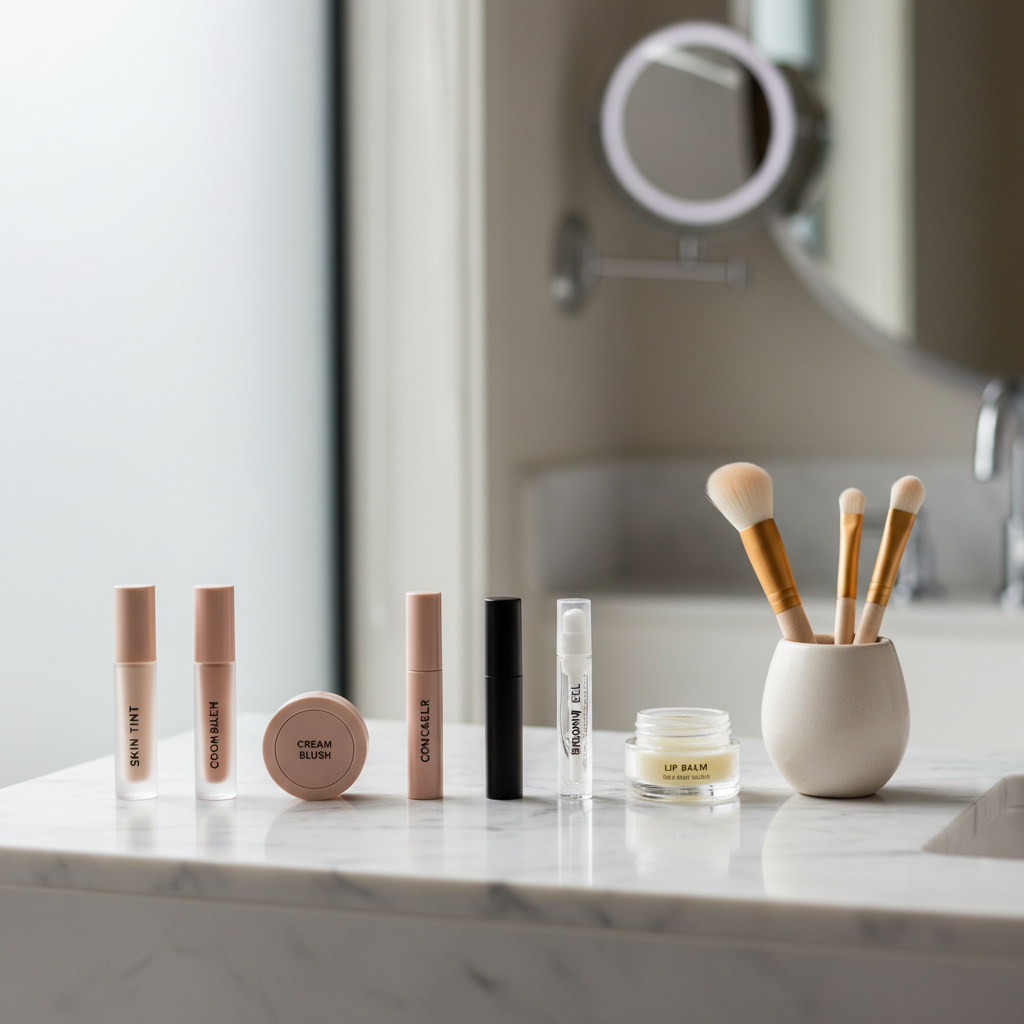
Practical packing routines for 3 common travel scenarios
Here are three setups that work in the real world, without packing your entire bathroom.
1–3 days: “carry-on only” quick kit
- Skin tint + concealer
- Cream blush + balm
- Mascara + brow gel
- One shadow stick
- Mini powder or blotting sheets
- 2 brushes (one face, one eye) + tweezers
This is the kit where multi-use wins. Your goal is looking polished fast, not recreating a 12-step routine.
4–7 days: balanced kit with one backup
- Add a second lip option and a small palette if you enjoy variety
- Bring a backup of the item you can’t replace easily on the road (often concealer or brow)
- Consider a mini setting spray if you’re doing long days
Events (wedding, photos, work): build around “one look”
- Pick the exact look you’ll wear, then pack only what serves it
- Bring complexion reliability (powder, blotting, small touch-up brush)
- Pack a stain-proof lip option if you’ll be eating and talking a lot
If you’re flying to an event, doing a five-minute trial at home with the travel-sized items avoids unpleasant surprises like a different undertone or a formula that separates.
Common mistakes (and the fixes that actually work)
- Packing “just in case” duplicates: Pick one dependable item per job, then add only what your itinerary demands.
- Ignoring leakage: Put liquids in a sealed bag, tighten caps, and store upright when possible.
- Bringing fragile powders loose: Pressed products travel better; if you must bring a powder, cushion it in the center of your bag.
- Overloading tools: Three brushes cover most looks: base, blush/bronzer, eyes.
- Forgetting hygiene: A tiny brush wipe or alcohol wipe keeps breakouts less likely, though skin reactions vary by person.
Key takeaways: keep liquids separate, choose multi-use products, pack for your plans not your mood, and protect anything that can shatter.
When it’s worth getting extra help (or simplifying more)
If you consistently struggle with irritation, contact dermatitis, or acne flares when traveling, it may be worth talking with a dermatologist about travel-friendly substitutions. And if you’re traveling for work and need a reliable, professional look, a quick consultation at a makeup counter can help you identify a small set of shade-matched staples—no pressure to overhaul everything.
On the other end, if you dread packing makeup at all, simplify. Many women feel better with a “face in five minutes” kit than a bag that creates decision fatigue.
Conclusion: pack lighter, look more put-together
The best travel kit is the one you’ll actually use, even when you’re tired, rushed, or getting ready in bad lighting. Keep your travel makeup bag essentials centered on a small core, tailor it to the trip, and protect liquids and breakables so you’re not doing damage control on day one.
If you want an easy next step, copy the checklist table, pack the core items, then add only two extras that match your itinerary. Your bag gets smaller, and your routine usually gets smoother.
FAQ
What are the most important travel makeup bag essentials for a weekend trip?
Stick to skin tint or tinted moisturizer, concealer, mascara, brow product, cream blush, and a lip balm or one lip color. Most weekend looks come together from those without needing a full kit.
How do I keep makeup from spilling in my carry-on?
Put liquids in a sealed clear pouch, tighten caps, and consider taping pump tops. If you can, pack liquids upright and away from items you’d hate to ruin, like chargers or a passport wallet.
Do travel-size products perform differently than full size?
Sometimes, yes. Travel sizes can dry out faster, and mini packaging may dispense more product than you expect. If you rely on a specific formula, test the mini version at home before you fly.
What’s the best way to pack brushes without wrecking them?
Use a slim brush case or a pouch that keeps bristles from bending. If you don’t have one, wrapping brushes in a clean cloth works, as long as the bag doesn’t crush them.
Should I bring foundation when traveling?
If you have events, photography, or long workdays, foundation can make sense. For casual trips, a skin tint plus concealer often looks more natural in mixed lighting and feels better on planes.
How many lip products should I pack?
One balm and one color covers most trips. If you’re attending an event, add a second color or a long-wear option, but avoid packing five similar shades you’ll never reach for.
What if my skin breaks out when I travel?
It can happen from stress, new climate, or different water. Keep your routine simple, avoid introducing new actives mid-trip, and if breakouts are severe or persistent, consider asking a dermatologist for guidance.
If you’re rebuilding your kit or you want a more “no-brainer” setup, aim for a small bag with compartments and commit to a core routine you can repeat anywhere. It’s usually the easiest way to stop overpacking without feeling underprepared.